September 15, 2008
After years of self-imposed exile, former acting Governor of
Massachusetts Jane Swift has reemerged onto the political scene. This time,
rather than spending taxpayer money on babysitters and helicopter rides, she is
heading - in all seriousness - the "Palin Truth Squad." This righteous group of
fact-finding crusaders has come to the defense of Republican Vice Presidential
candidate Sarah Palin, denouncing the nasty, truly despicable sexist slander
cast by Obama and his camp.
Swift and Squad took issue with a recent Obama speech where
he called out the absurdity of electing Republicans to fix the problems created
by...Republicans. "That's not change," the Illinois
senator said at a campaign event in a Lebanon,
Virginia. "That's just calling
something the same thing, something different. But you know you can put
lipstick on a pig, but it's still a pig."
And just hours after the remarks, Jane Swift was on a conference
call with reporters. A new talking point was born. "Senator Obama...uttered
what I can only deem to be disgraceful comments comparing our vice presidential
nominee, Governor Palin, to a pig," Swift said. (The accusation was based on a
joke Palin made during her RNC speech, saying that "the difference between a
hockey mom and a pit bull" is lipstick.)
By now, the faux-outrage has been thoroughly discredited.
Obama has used the phrase countless times before. McCain even used it to
criticize Hillary Clinton's 2007 Healthcare proposal. So like most campaign
blather, this "shock" will quickly dissipate.
But Swift is hoping the opposite - a revival of sorts - will
result for her career.
She is aligning herself with the newly anointed conservative
queen, pointing out the similarities: both Swift and Palin hail from small
towns, both were the first female governors of their respective states, and both
gave birth while holding office.
The analogy falls short in one key aspect, as Boston Globe reporter Stephanie Ebbert
points out. Swift was regarded, by both party and polis, as a failure.
After assuming the governorship (when Gov. Paul Celucci left
to become the Ambassador to Canada)
in 2001, she was embroiled in scandals, including the aforementioned helicopter
rides and babysitting assignments. But while those may have generated
headlines, an even more disturbing saga occurred under her watch, one that
seriously undermines any moral soapbox on which she currently stands and from
which she deigns to criticize.
The case involved the Amiraults, a working-class Malden family that ran the Fells Acre Day School, a childcare facility. In
1986, Violet and Gerald Amirault, and Cheryl LeFave (Gerald's sister) were accused
of heinous and sadistic acts against children. From the beginning, it was clear
that the case had major holes. It was largely based on testimony from the
children, some as young as four years old. And the techniques used to obtain
these stories are now widely discredited: coercive questioning, promises of
reward for "right" answers, and suggestive use of anatomic dolls. The resulting
stories were, by any measure, extreme - one child spoke of being tortured in a
magic room by an evil clown. Others were downright bizarre - one depicted
scenes of rape with butcher knives (though no wounds were found) and another
claimed that 16 children were killed at the center (though no bodies were found).
Though the tales were dubious to say the least, they
certainly made headlines. Even before the trial began, the Amiraults were
guilty in the court of public opinion. And when the gravel pounded, the
Amiraults were convicted of 26 counts of child abuse. Thus they were swept up
in a disastrous hysteria of the 1980s in which sensational (and incredible) allegations, ambitious prosecutions,
and a penchant for moral purity resulted in convictions based, in many cases,
on evidence that had been pounded
into the child-victims' heads and then predictably came out of their mouths. Indeed,
it was a moral debasing of justice.
Fast-forward to 2000. Gerald Amirault, despite his wrongful
conviction, had spent fourteen years as a model prisoner, taking college
courses and staying out of trouble. His alleged co-conspirators, Violet and
Cheryl, served eight years before being released - despite being charged with
the same crimes. (Violet and
Cheryl's release, interestingly, was predicated in part on their agreement to
adhere to a suspicious condition imposed by the district attorney - that
neither, once free, would discuss their case in the electronic media.)
Gerald Amirault's case came before the state parole board, a
stern body known for little sympathy - from 1988 to 1997, the board considered
270 petitions for commutation, and granted only seven. Disturbed by the facts
of the case, however, the panel led a six-month investigation, one of the
longest in its history. In June 2001, the board delivered a unanimous ruling
for the commutation of Gerald's sentence.
At the time, all that stood in the way of Gerald Amirault's
freedom was Gov. Jane Swift.
Six months after the board's ruling, Gov. Swift spoke.
Commutation, an official statement read, was "not warranted." By all accounts,
she failed to give an acceptable justification. She continually cited
Amirault's refusal to admit guilt, as well as his refusal to seek treatment, as
reasons to keep him behind bars. She failed to account for the possibility - a thought that obviously occurred to
the hard-nosed parole board - that he
wasn't guilty.
Swift's repudiation of the parole board's recommendation
that Gerald Amirault be released can be attributed to only two possible
reasons: Either Swift did not understand the case despite the fact that the
"evidence" against Amirault had been effectively and widely discredited, or she
understood that he was innocent but decided to keep him in prison to further
her own sinking political career. With the 2002 gubernatorial election looming,
justice took a backseat to job retention.
But her calculation failed. With approval ratings in the
single digits, she decided to hand over the Republican reigns to Mitt Romney
and fade out of the spotlight.
Now, she has reemerged. As she has said, she is certainly
qualified to defend Palin and lead the charge against Obama. Furthering her
career has clearly come before any quaint notion like "truth" or "justice." Just
ask Gerald Amirault.
September 11, 2008
You need not dig deep into the annals of history to find
examples of religious bloodshed. From the Crusades to the Inquisition to the terrorist
attacks seven years ago today, dogmatic interpretations of religious doctrine -
spanning almost every set of beliefs - have contributed to countless deaths and
persisting cleavages. But does censoring theological texts and statements remove these hatreds?
Administrators at the University of Southern California (USC),
after recently deleting sections from a Muslim student group website, appear to
think so. The material in question is a collection of hadith, or proclamations
passed down in the Muslim faith but not included in the Quran. These particular
hadith - the aggrieved party pointed to five different statements - concerned the killing of Jews.
A surface reading could lead one to believe that the
statements are threats. Upon closer examination, though, these hadith are
evidence of a mode of thought in Islamic tradition, far from a clear
instructional guide for most practicing believers. Censoring these statements,
in the presence of thousands of other nonviolent hadith on the student website,
not only violates key principles of academic freedom, but it is an
unconstitutional form of censorship.
To understand this case, one must first examine the role of
hadith in the Muslim religion. In short, hadith are the words and actions of
the prophet Muhammad that have been passed down through generations, mainly by
oral means. Because of this narrative nature, there are varying degrees of
hadith authenticity. Both the actual words (matn)
and the chain of narration (sanad)
play an important role in determining validity. Indeed, some hadith flatly
contradict others, and scholars carefully examine the origins and paths of each
transmission, a practice known as the science of hadith. And the conclusions
are different for each Muslim sect. Some reject the hadith used by others - for
example, the six major hadith collections that are central to Sunni belief are
not followed by a majority of Shi'a. Thus, the hadith is considered an
important but ultimately supplemental guide to the Quran in Muslim living.
On the website of the Muslim Student Association (MSA),
a now defunct student group whose site is hosted by the Muslim Student Union on
the USC server, is a compendium of
Muslim texts. These include information on the pillars of belief, a section
on misconceptions about Islam, and a searchable database of hadith. At
the search page, there is a preface: "[W]e would like to warn you that this
database is merely a tool, and not a substitute for learning, much
less scholarship in Islam." (The site also makes clear that the views expressed
are not affiliated with those of the
university).
Using this tool, Rabbi Aron Hier of the Simon
Wiesenthal Center,
a Jewish human-rights organization, found five hadith that advocated violence
toward Jews, he said. After bringing it to the attention of a USC trustee, the university took action. Provost C.
L. Max Nikias said "the passage cited is truly despicable...We did some
investigations and have ordered the passage to be removed." The material was
subsequently deleted, the Daily Trojan,
USC's student newspaper, reported.
Was this censorship necessary? Charlotte Korchak, incoming
president of USC's Students for Israel
and a member of the Hillel Jewish Center, thinks not. "I understand the fear of
Jews and why some might have an issue of it being up. I understand the reaction
of trying to get them removed," she told the Trojan. "At the same
time, is that really going to help? I'm Jewish and those are hard to read and
hard to comprehend, but it's their religion and it's a historical thing. To
leave them out would be a lie."
Not only would it arguably be a lie, but it would certainly
be a statutory violation if the
action was challenged in court. Because of a 1992 California
statute known as Leonard's Law, First Amendment protections are applied to
all private colleges and universities
in the state. The Bill of Rights applies only to governmental organizations,
including public universities, but this law extends protection to private
institutions of higher education. Thus, the same standards for censorship apply
to USC (a private university) as
those schools funded by the state, giving administrators far less leeway in
restricting student expression.
To uphold their censorship, administrators would have to
show that the website was likely to produce "imminent lawless action." This
criterion is based on the opinion in Brandenburg
v. Ohio (1969), where a Ku Klux Klan leader made inflammatory statements
at a rally in rural Ohio. At the
rally, references were made to the possibility of "revengeance" against
"niggers" and "Jews," among other instances of hate speech. Brandenburg
was found guilty under a Criminal Syndicalism statute, but the Supreme Court
reversed the conviction, declaring that the government could not punish simply
the advocacy of unlawful action. Because Brandenburg
could not conceivably execute what he claimed in his fiery speeches, much less
do so imminently, the high court
ruled that his speech wasn't worth prior punishment.
It is against this standard that the USC
administrators would have to justify their action, and their case would
undoubtedly be weak. The words were religious doctrine, and though they
certainly expressed intolerance, it is highly unlikely that they would have
spurned a student to actually kill their Jewish peers - much less to do so
imminently.
And the censorship also reeks of viewpoint discrimination.
If Bible passages were posted to a USC
website, would there be the same outcry for suppression? Leviticus 20:13, says, according to the New
International Version, "If a man lies with a man as one lies with a woman, both
of them have done what is detestable. They must be put to death; their blood
will be on their own heads." Indeed, this excerpt could be seen as advocating
violence against homosexuals, but unless it would do so imminently, rather than
over the long term, the passage may not be prohibited or censored.
Debating the violent tendencies of world religions is not
important to this case, though. Preserving academic freedom is.
When one hosts all points of view, there is a very practical
benefit. Those who are offended know who holds what views, and who, if they
deem necessary, to avoid. It is part of the genius of free speech - even hatred
has a useful purpose. Suppression only shoots the messenger, but it does little
to deter the message.
The MSA's site hosts
thousands of hadith. It is, as the site mentions, a tool for scholarly
research, a device for the continuing evaluation of hadith authenticity. Rather
than remove certain texts that are offensive to some, the site should be a
forum through which students and faculty (and anyone else, for that matter) can
glean truth from competing ideas. Rather than trying to change history by
running from doctrine, we should encourage the dialogue that has largely made
these radical viewpoints obsolete.
September 05, 2008
I'm as vicious a critic of cigarettes as there is - my
father, who smoked four packs of Camels a day, befouled our small Brooklyn
apartment (as well as his lungs and heart) and died of a massive heart
attack two months before my college graduation, at the age of 48. But I think
that the current mania for seeking to ban the nasty habit without actually
outlawing the product has finally gone too far. The recent Boston Globe report by Stephen Smith illustrates the point.
Smoking opponents, fresh from their completely appropriate
and salutary victory in banning smoking in
office buildings and, more recently, in restaurants and even bars, are now
on the verge of significantly extending the ban. The new restrictions, given an
initial nod of approval by city health
regulators at a hearing held yesterday, include bans on cigarette sales at Boston
drugstores and college campuses. In addition, regulations would, remarkably,
extend the ban to the outdoor patios
of restaurants where food is served.
It's perfectly understandable that the government would ban
smoking in enclosed spaces where second-hand smoke could easily affect the
health and comfort of non-smokers.
And it's likewise reasonable to ban the sale of cigarettes on university campuses
where some of the residents are underage. But what can be the possible
justification for banning smoking on the outdoor patios of restaurants? And is
it really reasonable to prevent drugstores from selling tobacco products,
merely because, as Barbara Ferrer, the executive director of the Boston Public
Health Commission told the Globe:
"Why, in a place where people go to get healthy and get information about
staying healthy, would you want to sell something that has absolutely no
redeeming value and ends up killing a lot of people?" (It does not take a huge
leap of logic to see the future movement to ban the sale of soda pop, candy,
and anything else without "redeeming value.")
There's an answer to Ms. Ferrer's question, and it goes to
the heart of our nation's founding: Liberty.
The oft-forgotten (and less rosy) corollary to our celebrated
self-determination is the liberty to do harm to oneself, as long as harm isn't
inflicted upon others. If we continue to make it harder for people to smoke, we
will get to the point where reasonable regulations, meant to protect
non-smokers, will become a virtual prohibition against sale and use of a lawful product. If we continue to
tighten the screws, and if we take the further (and inevitable?) step of
actually outlawing cigarettes altogether, we will produce yet another disaster
akin to the catastrophic "war on drugs" that has produced a series of monstrous
legal and social problems, including the exorbitant costs, the massive
violations of civil liberties, the highest rate of imprisonment in the world, and the corruption of many police and
enforcement agencies in this country and around the world. (Has anyone noticed
that the cultivation of the opium poppy in Afghanistan
- sold in the form of heroin largely to the illicit American market - is a
major source of funding for terrorist groups?)
There is yet another aspect of this debate that has received
little attention. When these types of products are removed from the shelves of
pharmacies and grocery stores, they will inevitably end up stuffed in corners
of freight ships and delivery trucks - part of the black market. Rather than
decrease the demand, restrictions are much more likely to distort the supply.
Take, for example, the massive underground operation that has arisen in England
after the government pushed cigarette taxes through the roof. The official rationale was to make the harmful product less available to the public. But it is now widely
known that most London club
bouncers double as bootleg tobacco providers. In just one instance in 2007,
customs officials seized over 50 million illicit cigarettes and over four tons
of hand rolling tobacco. Because of the nature of the black market, it is
impossible to gauge the overall effect, though some groups estimate the annual
revenue loss to be $50 billion worldwide. And it's not just lost money - where
there is no industry or government
oversight, anything can be put into
an already harmful product. In addition to increased chemical levels, the
counterfeit products, often made in Chinese forced labor camps, have been found
to contain "sawdust, tobacco beetles and even rat droppings," according to a BBC
report. So think twice when considering the benefits versus the detriments of
placing cigarettes next to health information and Nicorette patches at your
neighborhood pharmacy.
The Boston Public Health Commission spent less than an hour
before giving the initial nod of approval for extending the ban. The discussion
will soon enter a 60-day public comment phase before taking effect. Let us
prove, once again, we have more intelligence, more perspective, and more faith
in reason than those who represent us. Tell our city officials that there are
better ways to combat smoking - ways that don't require the government to tell
us what to do.
Persuasion, for instance, has proven an effective tool in
reducing the smoking rate in this country from over half the adult population
to well under a third. Additional progress surely can be made until the only
smokers left are the hard-core addicts who will do anything and go anywhere to
obtain the stuff. But to resort to increasingly Draconian bans risks not only a
backlash, but also the destruction of civil liberties that, in a free society,
must count for something.
By Harvey Silverglate & Kyle Smeallie
September 05, 2008
Despite breaching multiple
security classification laws, former Attorney General Alberto Gonzales, who
departed the office on Sept.
17, 2007 in the wake of multiple scandals, will not face criminal
prosecution, the Department of Justice announced on Sept. 2. The documents,
which Gonzales improperly carried to his home and failed to store in a safe,
reportedly discussed aspects of the administration's top-secret wiretapping
program. The DOJ investigation concluded, however, that Gonzales' breach of the
classification regulations was inadvertent. (For one thing, Gonzales forgot the
combination to the safe!)
Naturally,
the matter quickly became a political football. Congressman John Conyers Jr (D -
MI) asked the DOJ to "explain clearly why it declined to pursue charges against
Mr. Gonzales and what actions it intends to take." Conyers, a member of the
House Judiciary Committee, should know better. Those with even the slightest
experience with the federal government's security classification program - and surely this has to include
Conyers - know that these agencies won't hesitate to stamp "Top Secret" on a
ham sandwich. And while it's true
that a few documents containing genuine security secrets would, if
disseminated, cause arguable harm to the nation's security, the extent of overclassification is a national
scandal.
In my
forthcoming book, Three Felonies a Day:
How the Feds Target the Innocent (coming from Encounter Books in the third
quarter of 2009), I write about my experience in defending an East German
physicist, Professor Alfred Zehe, against a charge, growing out of an FBI
sting, that he engaged in a conspiracy with East German officials to commit
espionage. An FBI operative sold
obsolete - but still classified - submarine sonar technology documents to the
Communist East German embassy in the 1980s. East German officials allegedly
consulted with Professor Zehe over
the meaning of the documents, much as American governmental officials often
consult with American academics on a variety of issues, then and now. When
Zehe arrived in this country to attend a physics conference at MIT, he was
arrested and charged.
As my law
partners and I prepared to defend
Zehe at trial, we asked to see the documents in order to review them with an expert. The Department of
Justice objected - we needed to undergo a security clearance procedure before
seeing the documents. I was taken aback. It would be absurd, I told the judge, to require such a procedure, since I
was a native-born American citizen, I was a member of the bar, I had no
criminal record, and there was not a single reason to doubt my loyalty.
Besides, my credentials aside, the
documents were functionally useless and had been selected by the FBI as bait to
make an espionage case against Professor Zehe. The documents, I argued, were
currently in the hands of the East German Stasi, or secret police, in East
Berlin, thanks to the FBI's having sold them! If the Stasi were
sold the documents by the FBI, surely a presumptively loyal citizen could be
allowed to see them.
But my
common sense position got nowhere. The DOJ persisted in its objection -
classification regulations must be
obeyed. The judge, with some apparent embarrassment, agreed. The law, as
Dickens wrote, can be an ass. But surely the classification regulations and
procedures take the cake - part Kafka, part Gilbert & Sullivan.
And then
there's the case of the DOJ obtaining a temporary prior restraint injunction
against publication of a 1979 article in the politically radical magazine The Progressive, which purported to disclose the "secret" of
how to make a hydrogen bomb virtually in one's backyard. The government
actually convinced a federal district court to issue an injunction that lasted
for several months while the litigation proceeded, despite the fact that the
article's "secrets" had been gleaned from government libraries that were open
to the public! The injunction was dissolved only when another magazine
published the article, making the case "moot." (Unfortunately, the specter of
"security" issues clouding jurisprudence has only gained strength since The Progressive case.)
The
absurdities that spring from the government's obsession about keeping too many
secrets can fill volumes. But best of luck to whoever writes those volumes - their de-classifying litigation
against the DOJ and other government agencies tasked with keeping so much of
what our government does (so often incompetently - the real reason for so much
of the secrecy) would likely last a lifetime.
Kyle Smeallie assisted in the preparation of this piece.
August 30, 2008
Sarah Palin came to praise Hillary Clinton and to bury liberal feminism. It’s too bad for the rest of us, but don’t cry for Hillary; she provided the shovel. Relying on pre-ideological appeals to female solidarity, blaming sexism when she got stuck in second place, Clinton played the dangerous game of identity politics. Her loss is Palin’s gain. She gets to play office wife to John McCain.
Mitt Romney must be fuming, being eclipsed by a woman; but he shouldn’t be surprised. When Romney ran for Massachusetts governor in 2002, after swatting aside the Commonwealth’s first female governor, Republican incumbent Jane Swift, (who subsequently endorsed McCain,) he chose a female lieutenant governor, Kerry Healey, to walk ten paces behind him. Then, he rarely looked back: pursuing the presidency, Governor Romney provided little help to Lieutenant Governor Healy when she ran for governor against Deval Patrick in 2006 (and lost by some 20 points.)
McCain may prove more loyal to Sarah Palin, but selecting an attractive, grossly inexperienced, anti-choice, anti-science, (pro-creationist) female as vice-presidential arm candy, he seems no less contemptuous of women. If he’s elected because disgruntled Hillary harpies reward him for patronizing them, his contempt may seem justified.
August 29, 2008
I
came upon an article in Wednesday's Boston Globe about
possible reform measures for the Harvard University Police Department (HUPD)
following recent allegations of racist conduct. I felt a sense of indignation,
not only because I had seen this in the HUPD many times before, but because the
reform mentioned in the article was, in my opinion, a prescription for failure.
I was compelled to write those involved a memorandum detailing why they need to
get tougher with the HUPD if they really want to see things
change.
************************
Memorandum
To: Committee to
Review the Harvard University Police Department
Ralph Martin, Esq.
William Lee, Esq.
Professor Mark Moore
Professor Nancy Rosenblum
Matthew Sundquist, President of
Harvard Undergraduate Council
Professor David Wilkins
Cc: Drew Gilpin
Faust, President of Harvard University
Francis D. Riley, Chief of Police,
HUPD
Professor Charles Ogletree
Professor
J. Lorand Matory
Robert
Iuliano, Esq., Harvard General Counsel
Hon.
Margaret Marshall, Chief Justice, Supreme Judicial Court of Massachusetts
Tracy
Jan, Reporter, The Boston Globe
Renee Loth,
Editorial Page Editor, The Boston Globe
James R.
Houghton, Harvard Corporation/President and Fellows
Roger W.
Ferguson, Jr., Chairman of Harvard Board of Overseers
Mitchell L.
Adams, Member of Harvard Board of Overseers
Malcom A.
Glenn. President, The Harvard Crimson
Andrea Saenz, Editor-in-Chief, The Harvard Law Record
John S. Rosenberg, Editor, Harvard Magazine
John
Reinstein, Legal Director, ACLU of Massachusetts
Carol Rose,
Executive Director, ACLU of Massachusetts
Date: August 28, 2008
Re: Harvard
University Police Department and abuse of students and faculty
This memo
is addressed primarily to the members of the newly-appointed committee, chaired
by Attorney Ralph Martin, designated to look into problems that have arisen
(and been recognized) of late in connection with the Harvard University Police
Department's (HUPD) treatment of students and faculty members in a racially
offensive and problematic fashion. I am, however, copying certain other persons
in and out of Harvard who have expressed, or are likely to have, an interest in
this matter. Further, I am posting this memorandum on my weblog, The Free For
All (www.TheFreeForAll.net),
maintained on the website of The Boston
Phoenix (www.ThePhoenix.com), for
which I am long-time legal and civil liberties "Freedom Watch" columnist.
According
to Tracy Jan's front page story in
the August 27, 2008 Boston Globe, the six of you have been
selected by President Drew Gilpin Faust, in Jan's words, "to review the
diversity training, community outreach, and recruitment efforts of Harvard
police." (A follow-up piece appears in today's Globe) If, in fact, this is your Committee's designated approach to resolving
the problem of how the HUPD treats black members of the Harvard community, then
your work is destined to fail. The long-standing problems that beset the HUPD
are not going to be solved with more of the politically-correct, tendentious,
and ultimately unworthy thought-reform efforts connoted by the terms "diversity
training" and "community outreach." Rather, what is needed is some tough-minded
reform in HUPD governance. I have been a close observer of the HUPD for many
decades - ever since I entered the Harvard Law School Class of 1967. As a
criminal defense and civil liberties lawyer, I noticed an explosion in the
mid-1980s of student complaints about mistreatment by HUPD, with a majority
(but hardly all) of those complaints coming from black students and other
racial minorities. I also took some complaints from black faculty members.
In my 1998
book The Shadow University: The Betrayal
of Liberty on America's Campuses (The Free Press, 1998; paperback from
HarperPerennial, 1999), co-authored with Professor Alan Charles Kors, I tell the
story of Inati Ntshanga, a black South African undergraduate who, in 1993, was
subjected to mistreatment by the HUPD. I am enclosing with this memo a copy of
the relevant pages of my book (pp. 323-325), but I will proceed here to
summarize the incident, including how I tried both to obtain justice for
Ntshanga and effect some reform of, or at least supervision over, the HUPD.
To summarize the case: Ntshanga was
a proud student who had struggled against South African apartheid before coming
to the U.S. to
enroll in Harvard's Class of 1995. To support himself, he worked two campus jobs,
and one was at the HUPD headquarters, dispatching vehicles operated by a campus
shuttle service. One day in the fall of 1992, he claimed he was picked on,
without cause, by Sgt. Kathleen Stanford. An argument ensued, and though no
formal charges were brought, an air of acrimony remained. The following month,
Ntshanga was once again the subject of police inquiry. Four HUPD officers
approached him while he was performing his second job, collecting dirty laundry
from dorms during the Christmas period. The officers demanded that he produce
his student ID. Ntshanga did not have his card, he explained, at which point
one officer asked for "a welfare card." As tensions rose, Sgt. Stanford arrived
on the scene. Ntshanga was sure she would identify him as a student, even if
she didn't particularly like him. But, to his surprise and dismay, she denied
knowing him to be a student. The officers proceeded to arrest Ntshanga for
trespassing, breaking and entering, and possession of burglary tools (the keys
he used to enter the building - part of his job).
A county prosecutor, shocked that
the HUPD had gone to such lengths, dismissed the charges. As Ntshanga's lawyer,
I wrote a complaint to Margaret Marhsall, the then-Vice President and General
Counsel of the University, now the Chief Justice of the Supreme Judicial Court
of Massachusetts. She assigned the investigation to University Attorney Allan
Ryan. Ten months later, he issued a report clearing all officers, saying that
none of them - including Sgt. Stanford - knew Ntshanga was a student. He also
deemed the "welfare card" statement to be "standard procedure when a person
says he has no identification." There were obvious holes in the investigation,
such as Ryan's failure to interview witnesses to the first argument who could
attest to Stanford's knowledge of Ntshanga's status as a student. But, appeals
to both the Harvard president and the secretary to the faculty of arts and
sciences produced no response. Ntshanga returned to his native South
Africa with a bitter taste.
The
Ntshanga case bears a remarkable resemblance to one of the stories recounted in
the aforementioned Globe article.
Working at his summer job on campus, a Boston
high school student was confronted by HUPD officers as he tried to free his
bicycle from a broken lock. It is likewise similar to the experience told by
Professor S. Allen Counter in 2004, when he was mistaken for a black robbery
suspect while walking across Harvard Yard to his office. It is similar as well
to the 2007 incident when an HUPD officer inquired whether those attending a
black student group-sponsored Field Day were Harvard students or had permission
to be on the Radcliffe Quad, despite their having had a permit to do so.
My point,
of course, is that history has repeated itself many, many times. The first
time, as it is said, might be tragedy, but by the second time it begins to
resemble farce. For every case reported, there were obviously many that went
un-reported. Too many have had to simply swallow the insult and proceed with
life.
Indeed, I
have received so many complaints over the years from affected and offended
Harvard students, that I took the extraordinary step of placing a paid
advertisement in the Harvard Crimson
of October 29, 1993.
I specifically appealed to "Harvard students who have tangled with the Harvard
University Police Department." (A photocopy of the actual advertisement is
appended hereto). In the advertisement, I noted that my law firm had "in recent
years been involved representing students in unfortunate incidents with the
Harvard University Police Department" where the students had been abused. I
asked for other victims to communicate with my firm, and I then collected their
incidents. The results confirmed my suspicion - that abuse was more
widespread than one would have thought. I think that repeating such an outreach
effort today would yield helpful information.
In my view,
I've never been able to get adequate remedial action by the university in any
of my cases because the HUPD, simply put, is more police than Harvard. The
HUPD is unionized, and the university is very hesitant to deal forcefully with
the members of the Department. Many of the same reasons that municipal and
state police departments, in Massachusetts
and elsewhere, are hard to reform with regard to mistreatment of civilians
certainly apply to the HUPD. (Indeed, at the very time the Ntshanga case was
pending, then-General Counsel Marshall, who had jurisdiction over the HUPD, was
negotiating a new contract with HUPD. It proved not to be a propitious time to
get strong action from the university against misfeasance by HUPD officers.)
What the
HUPD needs is, assuredly, not some form of diversity or sensitivity
training. Such programs, for one thing, intrude upon the right of private
conscience - they are more appropriately
the tool of totalitarian governments and are unworthy of a liberal arts university.
Besides, such programs clearly do not work; all they do is make administrators
feel morally superior and give universities public relations opportunities to
claim that they are working to bring about equal rights. They are a public
relations fig leaf - a façade. The goal of the university administration should
be to guarantee citizens of the university the right to fair and equal
treatment, not to make anyone "feel good" and not to seek to force anyone to
believe, or to disbelieve, any particular proposition. The HUPD need not have
their minds and attitudes reformed (that's impossible, of course); they need
simply to understand that failure to abide by the rules will result in
dismissal from the department.
Nor will
"community outreach" or enhanced or reformed "recruitment efforts" make a
difference. There is a certain ill culture at HUPD that is more likely to
transform new recruits than the recruits are likely to reform the organization.
What we have learned in the study of municipal police forces is that black and
Hispanic police officers, once recruited, often have the same tendency to abuse
citizens, including black and Hispanic citizens, as do the white members of
those forces. An organization's culture is very powerful and does not readily
change just because different skin colors and tones are added to the mix. Nor
have I seen any convincing evidence that "diversity training" makes much of a
difference. Dismissal of offenders works - not only to rid the department of
offenders, but also, in the long run, to change the culture.
My
suggestion is that you drop the whole idea of doing an in-depth study of HUPD.
In particular, I urge you to refrain, at all costs, from recommending that the university implement "diversity training" or
any similar "feel-good" program. Instead,
your committee should remain a standing committee of university governance, and
it should examine, with the aid of a small staff, each complaint of mistreatment
of anyone in the Harvard community by
a HUPD officer. When an officer, after receiving due process, is found guilty,
he or she should be fired. I can assure you that in a very short time, the
abusive culture of HUPD will change.
*
* * * *
Enclosures/attachments: (2)
August 27, 2008
"I'm a PUMA," the button festooned woman at the local Box Lunch
declared. "Do you know what that is?"
"I know what that is," I
responded. "I think you're all nuts."
She didn't take offense (I give
her credit for a thick skin, although it may make her impervious to political
realities as well as insults,) and we engaged in a brief discussion. She
acknowledged that McCain was no feminist and said she would not vote for him;
but she "hated" and feared Obama and warned that his "horrible" past, including
unspecified prior "crimes," would be revealed as the campaign progressed. She
may not be voting for McCain, but she appears to be listening to attacks on
Obama made on his behalf. And she declared that McCain would have limited power
as president, because "we're going to have 60 Democratic Senators in
November."
Oh. Her idiotic confidence in the prospects for a Democratic
Senate (along with her ignorance of executive power) was interesting: the
rationalizations of thoroughly irrational people are always a surprise and a
reminder that debating them is futile. With luck, they can be neutralized, but
not persuaded.
Maybe Hillary's convention speech succeeded in convincing
some of her more realistic acolytes to follow her in supporting Obama. It's too
soon to tell. But they can be forgiven for assuming that her speech was more
strategic than sincere, and, in any case, the enmity and contempt for Obama that
she aroused during the primary will not be easily defused. Her praise for
McCain's commander in chief credentials and disdain for Obama's will not be
forgotten, as long as there are Republican attack ads, and an army of Hillary's
harpies.
They are not feminists, if feminism entails reason and a
commitment to advancing equality and reproductive choice. They're female
chauvinists (who may or may not be inspired by racism along with crazed
notions of gender solidarity, considering their visceral hatred of Obama and
susceptibility to smear campaigns against him.) They're hysterics, who stand, or
scream, in opposition to feminism and its insistence that women are rational,
realistic, intelligent beings who can be trusted with power. Hillary shouldn't
trust them with her legacy.
August 26, 2008
Life, as a rule, is not all that simple. One should be wary
of
cries for "moral clarity" in a
world that sometimes makes excessive rigidity dangerous to human life and,
ultimately, to humanitarian values as well. The life and career of the late
Wolfgang Vogel, the subject of
New York
Times former diplomatic correspondent (now assistant managing editor) Craig
R. Whitney's superb
biography Spy Trader:
Germany's Devil's Advocate & the Darkest Secrets of the Cold War (Times
Books, 1993), is only lightly touched upon in Whitney's tantalizing
obituary that
appears in this past Saturday's
Times.
I first recognized
Vogel's
complexity, but also his underlying humanitarian values and devotion to
liberty, during my only face-to-face encounter with him in the winter of 1983.
I had just been retained by Vogel to represent East German
university professor Alfred Zehe, a physicist who had just been arrested by the
FBI when he landed at Boston's Logan Airport
to attend a conference of physicists at MIT. The story of Professor Zehe, and
how he came to be inveigled into a clumsy Cold War "sting" engineered by the
feds, is told by Whitney and will be further explicated in my forthcoming book,
Three Felonies a Day, on the
Department of Justice (second quarter 2009). My encounter with Vogel left an
indelible impression.
Vogel and I met over breakfast in the Parker House Hotel. I
was joined by my then-law partner Jeanne Baker, and Vogel by his wife Helga,
whom he said he needed to translate (even though I suspected that the canny
fellow was actually quite adept in English). I spotted a federal prosecutor having
breakfast at a nearby table, and two men in trench coats, who I suspected were
FBI agents, at the table next to that one. I warned Dr. Vogel that we should
not speak about confidential matters, since there was a prosecutor and two
suspected FBI agents sitting nearby. "How do you know they are FBI agents?"
Vogel asked. "Do you know them?" I admitted that while I knew the prosecutor, I
did not know the agents, but they were actually wearing their trench coats indoors,
and this was a sure tip-off that they were agents and were wired for sound.
"Ah ha," Vogel continued, a slight smile racing across his
otherwise stolid face. "And are you sure that the trench coats are FBI, not KGB?" I was startled by the question, which Vogel then went on to
answer himself: "You know, the FBI and the KGB buy their trench coats from the
same supplier." Thus did Vogel make the
point that the security services of all nations pose a potential threat to
liberty if not subject to adequate controls. It was at that moment that I began
to recognize that this was a devotee of liberty, but wily enough, and
sufficiently a survivor, to speak in the kind of code language not likely to be
understood by either FBI or KGB agents.
After the fall of the Berlin wall and the reunification of Germany,
German prosecutors, employing a revisionist view of history, indicted Vogel for
fraud, embezzlement, and related crimes growing out of his activities as a
lawyer adept at dealing with both sides during the Cold War and negotiating the
release of accused spies as well as Eastern bloc citizens seeking to come to
the West. One of the major charges was related to Professor Zehe's legal fees,
which Vogel had transmitted to me from the East German government. These, and
other monies, the prosecutors alleged, were funds embezzled by Zehe from the
state treasury. These charges were dropped after I executed an affidavit
swearing that Vogel in fact paid the
monies to me. Other lawyers paid by Vogel did the same. Still other charges
were reversed on appeal, leaving only a minor charge resulting in Vogel's
disbarment, but not imprisonment.
Wolfgang Vogel had been responsible for an estimated quarter
million human beings' escaping the clutches of totalitarianism, but he was
treated, after the fall of Communism, like a criminal rather than a hero. May
he rest in piece, and may his good reputation outlive his tormenters and
detractors.
August 14, 2008
August 14, 2008
August 08, 2008
Dear readers: Trust me. I’m a long-time criminal defense and
civil liberties lawyer, and I’m telling you that the “war on drugs” has been
an abysmal and wholly destructive failure. Not only has it been responsible for
the erosion of myriad provisions of
the Bill of Rights, but this “war” has
made it significantly more difficult for those interested in promoting healthy
practices, especially among the young, to speak with credibility and
persuasiveness on the dangers of abusing both lawful and illegal drugs.
Yet, just
as the smoking rate continues to drop – due in large part, state health authorities and
The Boston Globe concede, to
enormously effective anti-smoking advertising campaigns – there is agitation anew for banning cigarettes entirely, or at
least making it so difficult to smoke that it becomes an effective ban. The
latest stealth effort to effectively criminalize tobacco smoking without formally doing so is the United States Food and
Drug Administration’s push for regulatory authority over the industry. It has
already gained approval (by an over whelming 326-102 margin) in the House, and if the Senate does the same by a veto-proof majority,
noted the Globe editorial,
“regulators will have new tools to control the marketing and content of a
deadly and addictive product.” We can then be sure that the government will
make it increasingly difficult to buy, sell, and use cigarettes – right up to
the edge of total prohibition.
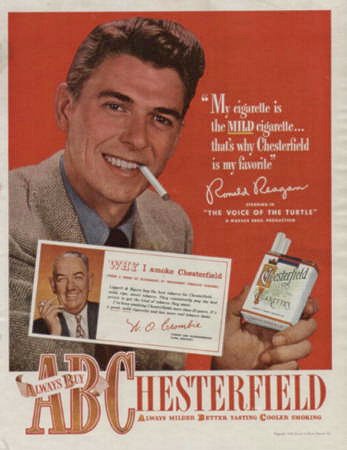 The result almost certainly will be
an increase in smoking, especially
among the rebellious young. At worst, an enlarged “war on drugs” will add
tobacco to the ever-growing list of substances on which the feds have increasingly
been cracking down for decades. And caught in this war’s crossfire have been
the cherished American values of freedom of speech, freedom from unreasonable
search and seizures, freedom from Draconian property seizures via asset
forfeitures, and other essential liberties. Adding tobacco will only worsen
these “unintended” casualties.
The result almost certainly will be
an increase in smoking, especially
among the rebellious young. At worst, an enlarged “war on drugs” will add
tobacco to the ever-growing list of substances on which the feds have increasingly
been cracking down for decades. And caught in this war’s crossfire have been
the cherished American values of freedom of speech, freedom from unreasonable
search and seizures, freedom from Draconian property seizures via asset
forfeitures, and other essential liberties. Adding tobacco will only worsen
these “unintended” casualties.
Anyone questioning the effectiveness of freedom in combating drug abuse, in
contrast to the disastrous consequences of interdiction by law, needs only to
read a long-forgotten dissenting court opinion by one of the liberal giants in
legal history, Circuit Judge J. Skelley Wright, who sat on the U.S. Court of
Appeals in Washington
from 1962 until 1988. Judge Wright, in the historic tradition of American
liberalism, believed in free speech, free choice, and promotion of public
health – three goals that he found wholly compatible.
The
controversy arose when a group of broadcasters banded together to challenge a 1970
Congressional statute that banned advertising of cigarettes on radio and
television stations. As a result of the ban, cigarette companies pulled their
substantial on-air commercials and instead turned to advertising in various
print media. The broadcasters were furious over this loss of revenue to a
competing medium. It was, oddly enough, the cigarette industry itself that was
lobbying for enactment of the broadcast ban. Why, one asks, would the cigarette
companies actually want a prohibition
against their right to advertise on the air?
The answer
is entirely understandable with the full background in mind. Judge Wright, in
his dissenting opinion, decried the decision of his brethren on the court to
allow Congress to enact such a ban, seemingly in the interests of public
health. Wright pointed out that prior to the advertising ban, cigarette advertising
was subject to the Federal Communications Commission’s so-called “Fairness
Doctrine,” a statute that required equal broadcast time to be given to both
sides of a “matter of public controversy.” The anti-smoking forces of that day
argued that since cigarette advertisers flooded the airwaves with smoking ads,
the opponents of smoking were entitled to “equal time” to inform the public of tobacco’s
deleterious health consequences.
When the federal courts upheld this
position in a 1969 court opinion, the
anti-smoking forces launched one of the most effective public health
advertising initiatives in history. As Judge Wright pointed out, cigarette
companies advertised to gain brand loyalty at the expense of competitors, but
the more they advertised, the more “equal time” was given to the anti-smoking
forces. As a result, Judge Wright noted, “these advertisements triggered the
anti-smoking messages which were having a devastating effect on cigarette
consumption.” While the companies increased their advertising in order to
protect their brands, “for every dollar they spent to advance their product,
they forced the airing of more anti-smoking advertisements and hence lost more
customers.” The era of the “equal time” for anti-smoking electronic
advertisements produced a dramatic reduction in addictive conduct.
It came as
no surprise to realists and cynics alike, then, that the industry sought
congressional legislation banning tobacco advertising on the air altogether. No
single company could afford to cease advertising for fear of losing their
deadly race for brand loyalty. Together, though, the industry could hardly wait
for legislation to ban tobacco advertising, thereby eliminating the
anti-smoking forces’ legal right to air their “equal time” ads. Nor could the
tobacco companies simply have a meeting and agree to stop advertising in order
to get the anti-smoking campaign off the air, since such an agreement would
likely have broken anti-trust laws, both a civil and criminal violation. So the
tobacco companies actually had to lobby Congress to ban their own commercials – and, inferentially,
the anti-smoking campaign as well – from the air. Congress, as usual, did what
the lobbyists, and the campaign contributions, dictated.
As Judge
Wright pointed out, “At the time…the suggestion of voluntary withdrawal [of cigarette advertising
by the companies] was taken by some as a long delayed demonstration of industry
altruism.” But in fact it was the industry’s way of stripping the immense power
of the anti-smoking ad campaign. “The result of the legislation,” wrote the
judge “was that as both the cigarette advertisements and most anti-smoking
messages left the air,” advertisers switched to non-electronic media and there
was “an immediate resumption of the upward trend in consumption.”
“The theory
of free speech is grounded on the belief that people will make the right choice
if presented with all points of view on a controversial issue,” wrote Judge
Wright. This theory was well illustrated when the anti-smoking forces were
given equal time to meet the tobacco companies’ advertisements.
As the
increasingly destructive “war on drugs” has demonstrated, prohibition against
the taking of mind-altering substances has been an utter failure, just as
prohibition was an equal failure in the war on alcohol. In recent years,
largely as a result of public and private charitable funds going into
anti-smoking campaigns, the smoking rate is at its lowest point in memory. No
responsible governmental official should even think of anything that approaches
prohibition. And yet, of course, they surely will, as the law edges closer and
closer to a complete ban
And the axiom well known to every
mother surely applies to Big Brother - you cannot order kids to stop doing
anything. All you can do is to persuade. And without freedom, persuasion is
impossible.
Kyle Smeallie assisted in the preparation of this piece.
August 04, 2008
My Freedom Watch column on the death of parody on American
college campuses, which appears in the Boston
Phoenix ’s August 1st issue, provoked more of a response than
any of my columns in recent memory. My email in-box was jammed with messages,
largely from those who agreed with me, but a few from less-than-convinced (or
at least less-than-happy) readers. I encouraged some of the more perspicacious
writers to direct their comments to the letters-to-the-editor page. Overall, I
got a sense of declining respect for campus culture – which, I have to admit,
has been precisely my own response to the takeover of campuses by the
post-modern sensibility that values propaganda over free speech and elevates
cultural and political goals over due process and fact-finding in student
disciplinary proceedings. (My fuller arguments concerning these dangers are
laid out in Alan Charles Kors’ and my 1998 book, The Shadow University: The Betrayal of Liberty
on America’s
Campuses (paperback from HarperPerennial, 1999).
Among the
more interesting comments, however, were those concerning the central part of
my column: how censorship came to Harvard Law School (HLS) just as Barack Obama
was graduating from both the school and from his position as President of The Harvard Law Review. One
administrator at HLS commented on the piece generally without referring to the
central role the school played in my discussion of the death of parody in
academia at large. In other words, mum’s the word or, as they say in the real
world, “no comment.”
A faculty member said that things
at HLS were as bad as ever, although it had been my personal impression that the current dean, Elena Kagan, was a significant improvement over her
predecessor Robert Clark, who seemed willing to sacrifice just about any
principle in order to keep the restless natives quiet and calm on his watch.
Still another faculty member reminded
me that the overwhelming faculty vote for adoption of the infamous HLS Sexual
Harassment Guidelines, which swept within its prohibition a broad variety of
speech traditionally protected by academic freedom, perhaps understated the
degree of faculty opposition to the censorship inherent in the measure. As I noted
in the piece, the radioactive atmosphere led some fair-minded faculty to vote
for the Guidelines as the lesser of the available evils.
I did, in
my column, point out that the HLS faculty’s peripatetic fighter for liberty,
Alan Dershowitz, voted for the Guidelines with major reservations and only
after certain modifications were made to the Code. Dershowitz did, indeed,
defend the rights of the parodists, arguing vociferously that the parody was
protected speech under both the First Amendment and principles of academic
freedom. He managed to get a provision inserted into the Guidelines that purported
to exempt from prohibition any speech that would be protected under the First
Amendment. (However, this “First Amendment savings clause” provision found its
way into only one section of the Guidelines, and it was still the student’s
risk that he or she would potentially guess
wrong as to whether a particular parody would fall within the protected
category.) Dershowitz and perhaps a
few others voted for the Guidelines only because it was the best alternative in
a situation that was rife with faculty and administration anger at free speech.
A couple of faculty members, utterly disgusted with the goings-on, refused to
show up for the faculty vote at all. It is hard to say that these were “purists”
for heroically boycotting the whole
scene, or whether they simply threw in the towel and thereby enabled the
censors.
All in all,
it was a very unhappy time at HLS, and it may well be that there would be more
opposition to the Guidelines had the parody arisen today rather than in 1992.
But I wouldn’t bet on it. The small
number of faculty members who opposed the Guidelines, including Dershowitz who
voted for them, are much nearer to the end of their careers than to the
beginning, and they are being replaced by younger faculty members whose
fidelity to academic freedom in the face of a demand for politically-correct placating has not yet been sorely tested. The
sad fact, in my estimation, remains: There are still things Harvard Law students
could safely say in Harvard Square that they wouldn’t dare utter in Harvard
Yard.
August 01, 2008
Boston Mayor Thomas M. Menino treads a shameful, unwise,
constitutionally dubious, and ultimately ineffective path when he orders his
goons to keep the untidy street performers from the plaza surrounding City Hall
and Faneuil Hall Marketplace. Relegating the
clowns, artists and other performers
to a small sliver of territory, outside of the main arena of activity, not only
forecloses more than one performance at a time, but relegates the performers to
an inconsequential status. In fact, they are – or should be – the life of the
party. Only adding irony is the fact that the center of life and excitement in
the Faneuil Hall area should be interrupted by a mayor whose speeches and other
public statements are so dull as to make Sominex unnecessary.
The concept
of “free speech zones” has had a checkered history in the Boston area and elsewhere around the country. In the 1988-89 academic year, Jean Mayer, then-President of Tufts
University, ordered that student speech and demonstrations should be limited to
certain “free speech zones” located at certain inconspicuous places on the
campus to better maintain order. Students the next morning marked the entire
campus with chalk, denominating “free” and “unfree” zones. When the major daily
newspapers got wind of the plan, and news photographers showed a campus that
looked like Berlin
in 1946, Mayer backed off. After all, how would it look to the world if the
administration of a liberal arts campus turned out to be a censor of free
speech and academic freedom?
Unfortunately,
such “free speech zones” (they are in fact censorship zones, since 99% of the
typical campus is off-limits for free speech when small areas are designated as
“free speech zones”) are increasingly common in an era where universities
function more like businesses than institutions of higher education.
Administrations tend to back down, though, when they attract the attention of organizations such as The Foundation
for Individual Rights in Education, www.TheFire.org.
(Disclosure: I am Chairman of the Board of FIRE.) Recent cases at the University
of Nevada-Reno, Clemson
University, and Texas Tech
University prove that,
like bottom-line focused businesses, today’s colleges and universities abhor
negative press.
And state
and federal authorities turned Boston
into an “unfree” speech zone during the 2004 Democratic National Convention. When the restrictions were challenged by the
ACLU of Massachusetts and others, U. S. District Judge Douglas Woodlock wrote a
sad opinion saying that he simply did not have the time and expertise to second-guess
the law enforcement experts providing
security for attendees.
One would
think that the Faneuil Hall and City Hall area is more akin to the quad of a
college campus than to the arena outside of a political convention – the latter
being a place where security becomes of utmost (even if regrettable)
importance. The mayor wants his office in City Hall “protected” from the din
below. Restaurant owners want their patrons
to enjoy the kind of quiet they would get in a suburb or a farm rather than a world-class city. But what makes
a city great is the vibrancy of its daily life. And the street performers
outside Faneuil Hall offer more life than, for example, the guy that Boston Herald columnist Howie Carr appropriately,
even if somewhat cruelly, refers to as “Mumbles Menino.”
July 25, 2008
“Hide your children! The British are coming!!”
From the mouths of militiamen came the now-famous warning:
the British had invaded, and the time to fight for independence had arrived.
Today, nearly a quarter-millennium after the colonists’
struggle, some citizens see a new threat after the U.S. 3rd Circuit Court of
Appeals handed down two key free speech decisions this week. Their warning
would sound something like this:
“Hide your children! The Nipples are coming!!”
“[N]ine-sixteenths of one second”
worth of nipple, to be precise. That was the exact amount of time that halftime
viewers were exposed to Janet Jackson’s breast during the 2004 Super Bowl,
according to the court. A three-judge panel declared Monday that the FCC was
wrong to slap CBS with a $550,000 fine following the “wardrobe malfunction,”
saying that the regulatory body could not hold broadcasters responsible for
actions of the “independent contractors hired for the limited purposes of the
halftime show.” In other words, because CBS did not know that Jackson’s nipple would indeed slip, it could
not be held responsible.
The court went on to say that the FCC, in handing down such
a large fine, had failed to give broadcasters advance notice of changing its
policy of “practiced restraint” in regulating airwaves for the past 30 years.
While the decision was a victory for free speech advocates,
some social conservatives and federal regulators saw it as a blow to American
families. Kevin J. Martin,
FCC Chairman, said in a statement, “I am surprised by today’s decision and
disappointed for families and parents.” (Martin should not have been so
surprised, in fact. The notion that people should be punished only for
transgressions that they intend and
over which they have some reasonable degree of control has long been written into the Anglo-American legal system.
Only those with no respect for law would fail to understand this fundamental
precept.)
Just one day later, another decision favoring free speech
was delivered. The same Court of Appeals ruled that the 1998 Child Online
Protection Act (COPA{//en.wikipedia.org/wiki/Child_Online_Protection_Act})
was unconstitutional, as it blocked too much content to be consistent with the
First Amendment. The law, which has been under a permanent injunction since its
creation in 1998, would block Web sites from making objectionable content
available to minors.
Again, there was frustration from family advocacy groups. “The 3rd Circuit has once again come to the aid of
online pornographers,” Bruce Hausknecht, judicial analyst for Focus on the
Family Action
said. “In effect, the court said we
can’t protect our children from online filth if the law might make some adult
seeking his porn ‘fix’ uncomfortable.” [emphasis added]
What is most interesting about this statement is Hausknecht’s
use of the word “we.” Who exactly is “we” in this case? Is it the federal
government? Is it the advocacy group, Focus on the Family? Or does it refer to
actual families?
If he is referring to families, he is simply wrong. Leaving moral judgments in the
hands of federal regulators would give families less ability to control what
their children watch. And that is precisely what the court recognized. Rather
than have Big Brother regulate online material, allowing less restrictive
methods such as filtering technologies and other parental tools would both
retain basic First Amendment freedoms and allow individual families to choose
what material is appropriate in their view.
Trading the freedoms for which our forbearers fought in exchange
for retaining a standard of “decency” (as defined by the federal government) is
simply ludicrous. And, if there must be a government body like the FCC to
monitor our airwaves, they must apply their “indecency” statutes with consistency.
If they are not told of changing standards at the FCC, how do avant-garde
programmers make new content? In short, they don’t.
The court, in these two important decisions, has shown that it
favors a less restrictive approach to regulation. Far from neglecting the
well-being of our youth, the decisions recognize the inability of Washington to
effectively monitor and enforce decency – a task better suited to the family.
But there is also a larger issue at stake – one of
government thought-control and the free flow of ideas. The late Supreme Court
Justice Hugo Black noted the importance
attached to these issues by those who gave us the American Revolution. “The
Framers [of the Constitution] knew that free speech is the friend of change and
revolution,” he said. “But they also knew that it is always the deadliest enemy
of tyranny.”
Kyle Smeallie assisted in the preparation of this piece.
July 15, 2008
By Harvey Silverglate,
My wife and I wish to commend the
staff of The New Yorker. They have
finally realized that the level of political rhetoric in this country has
fallen so low that the only appropriate response is satire. There is no way
that I could have possibly responded to my critics and detractors as
effectively as has the artist who drew that cover. It demonstrates once again
that a picture is worth more than a thousand words.
I’ve been unable to convince the
nation that I am not a Muslim, for one thing. Now, mind you, I would not feel ashamed
if I were a Muslim. It would be a sad day in America if citizens have to be
ashamed of their religious beliefs and affiliations. But my hidden critics and
enemies are seeking to ‘tar’ me with the brush of being a Muslim. And somehow
that rumor takes on a life of its own. I hesitate to even deny it, because one
should be proud to be a Muslim in America, much as Catholics are
proud, Protestants are proud, Jews are proud, Buddhists are proud,
Scientologists are proud – but you get the point. However, facts and truth seem
not to matter in the realm of the Political Attack Machine, or perhaps I should
call it the Hate Machine.
And this Hate Machine spares not
even my better half. Vile whispers have cast Michelle as a modern-day 1960s
black radical, carrying with her the racial hatred that any sensible person
would have long ago rejected. Will my
children be the next objects of these attack dogs? We can only hold our breath
and wait and see.
So when unreality begins to take
over reality, and truth and facts cease to matter, our only effective remaining
weapons are satire and parody. My wife would never carry an AK-47 assault
rifle, just as she would never carry the racial hostility so readily placed
upon her shoulders. I would never burn an American flag (although I believe
that such burning is and should continue to be constitutionally protected by
our First Amendment), but a lack of lapel pins signals, to some, a “lack of
patriotism.” Sadly, such is the reality of our political culture in 2008. Far
from advancing racist ideology, The New Yorker has well served the
national dialogue by, at long last, exposing the ludicrous – and evil –
underbelly of the Hate Machine.
If you want to understand the
importance of parody and satire in the life of a free nation, you cannot do
better than to sit down and read the Supreme Court’s unanimous 1987 opinion in
the historic case of Hustler v. Falwell,
found at 485 U.S. 46.
It was written, interestingly, by the late Chief Justice William Rehnquist, not
always a friend to freedom. But in the realm of protection of satire and parody
as an essential method by which social and political evils may be effectively exposed
and criticized, the justices were unanimous in joining the Rehnquist opinion. In
that case, the justices ruled that the First Amendment protected Hustler Magazine’s vicious parody directed
at the now-deceased Reverend Jerry Falwell. Hustler
publisher Larry Flynt suggested that the good reverend experienced his first
sexual encounter in a drunken orgy with his mother in an outhouse. Not only was
this vicious satire deemed constitutionally protected, but the court went on to
review the importance of satire and parody in the American political discourse
from the very earliest days of the founding of the Republic. Many of the
satires and parodies that helped advance American political life were as or
more biting even than The New Yorker’s
well-crafted assault on my and my wife’s cowardly whispering critics who spread
anonymous rumors rather than announce their lies openly.
Long live satire! Long live parody!
Long live truth! May God bless you all, and our beloved United States of
America which, I have the duty to advise you, is in some trouble if The New Yorker suffers for telling the
truth with such moral clarity and, even more importantly, good humor.
And, oh yes, one more thing: Please
remember to vote!